
Which Fabric Is the Best for Sherwani: All You Need to Know
A sherwani is one of the important outfits a groom will wear. It represents tradition, style, and confidence. But before embroidery, colors, or design are chosen, one key decision must be made the fabric for sherwani.
At Shameel Khan, every wedding sherwani begins with careful fabric selection. The right material shapes the sherwani, detailed embroidery, and ensures the groom feels comfortable during the long wedding celebrations.
Why Fabric Matters in a Sherwani
The fabric affects how a sherwani fits and how it looks on the wedding day.
We offer quality fabric for a sherwani should offer:
- Good structure, so the sherwani keeps its shape
- Smooth drape so it falls naturally on the body
- A refined surface that works well with embroidery
At Shameel Khan tailors traditional methods to improve the look of the garment. Techniques like hand set sleeves allow natural arm movement, while pick stitching strengthens seams and keeps the sherwani structured. Hand embroidery also adds detail and a traditional finish to the design.

Best Fabric Options for Sherwani
Fabrics play an important role when designing a high end wedding sherwani. We offer different quality fabrics to help you make the perfect sherwani for your wedding.
1. Jamawar
Jamawar is one of the most popular choices for wedding wear. The fabric carries woven patterns that add dimension without excessive embellishment.
Why do grooms choose it:
- Texture suitable for ceremonial occasions
- Intricate embroidery fabric for sherwani work
Jamawar for winter weddings or grand receptions where visual richness matters.
2. Raw Silk
Raw silk has a subtle sheen that photographs exceptionally well. Many modern grooms in the US prefer it because it balances tradition with a contemporary look.
Benefits include:
- Lightweight yet structured feel
- Ideal for detailed embroidery
- Breathable enough for long wedding celebrations
Because raw silk accepts embroidery so well, designers often treat it as the ultimate designer sherwani fabric.
3. Velvet
Velvet delivers unmistakable luxury. When crafted correctly, it creates depth that stands out in evening lighting.
Ideal for:
- Winter weddings
- Formal reception sherwani
- Statement pieces with minimal embroidery
Velvet expert handling during tailoring. Too much structure can flatten the pile, which is why hand finished techniques remain essential.
4. Self Embroidered Fabric
Self embroidered with patterns directly into the weave. Instead of heavy embellishment, the texture itself carries the design.
Why they appeal to modern grooms:
- Reduced weight compared to dense embroidery
- Perfect for understated luxury
These fabrics work particularly well for other wedding events.
Choosing Fabric Based on Wedding Season
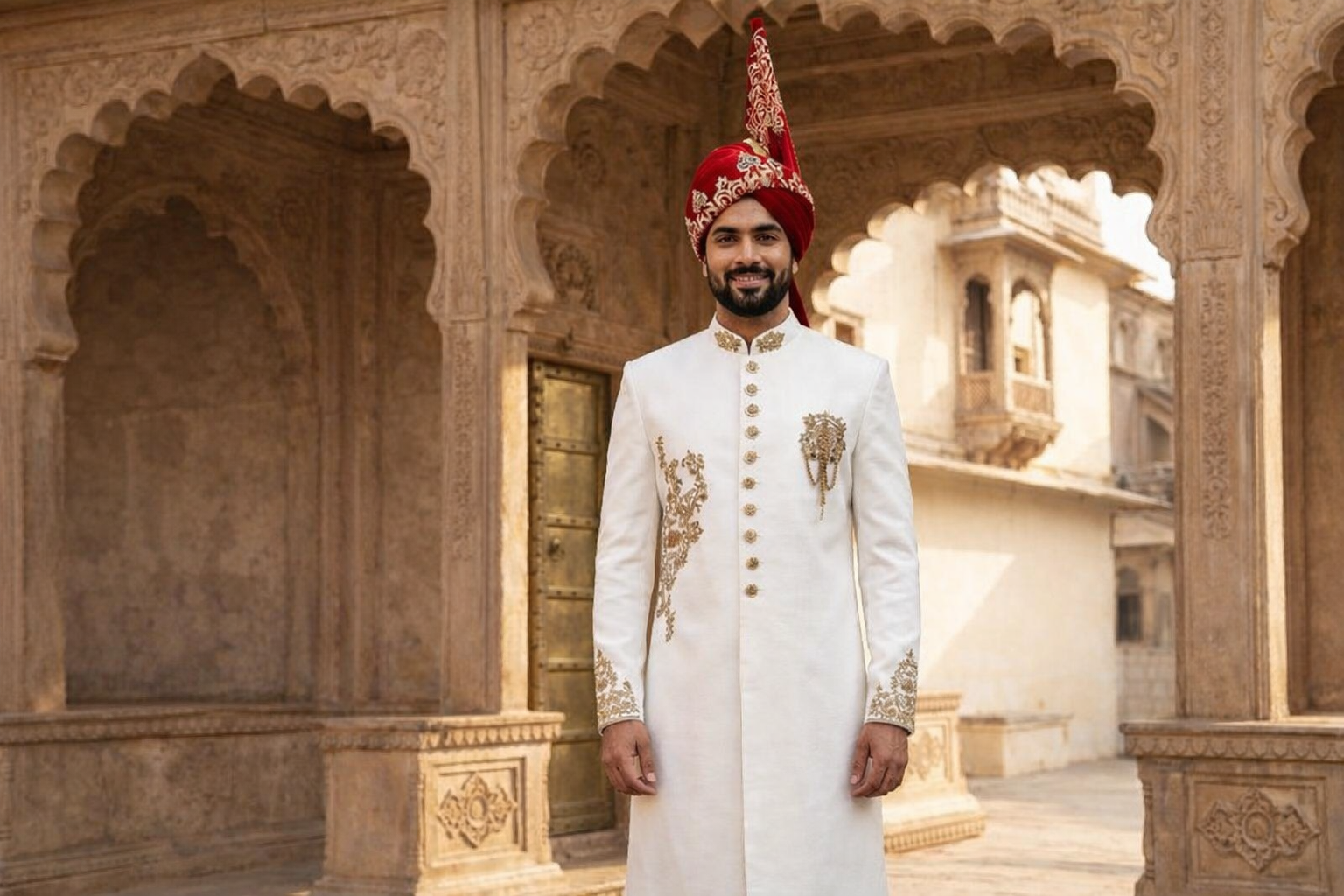
The wedding season is important when choosing the best fabric for sherwani. The weather can affect comfort, style, and how easy it is to wear during long events like engagements, barat, and nikkah.
Summer Weddings
You can choose lightweight fabrics that remain breathable during long ceremonies.
Best Options:
- Raw silk
- Jamawar
- Self embroidered fabric
These fabrics maintain structure while keeping the groom comfortable under warmer conditions.
Winter Weddings
Colder months call for fabrics with texture.
Best Options:
- Velvet
- Jamawar
These fabrics provide warmth while adding visual depth to evening wedding photography.
Shop Our Wedding Sherwani Collection
Check out the latest wedding sherwani collection at Shameel Khan. Each sherwani is made with quality fabric and detailed embroidery and choose a wide range of custom designs and colors for your special events.